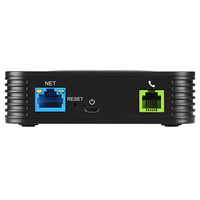
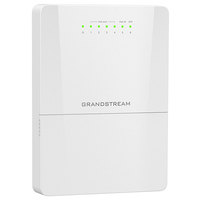
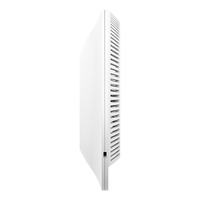
- Unterstützt 2 SIP-Profile durch zwei FXS-Ports und ein einzelner 10 / 100Mbps Port - TLS und SRTP Sicherheitsverschlüsselungstechnologie zum Schutz der Anrufe und Konten - Automatisierte Bereitstellung Optionen gehören TR-069 und XML-Konfigurationsdateien - Unterstützt 3-Wege-Audiokonferenzen - Failover-SIP-Server schaltet automatisch in den sekundären Server Hauptserververbindung verliert - Unterstützt T.38 Fax für Fax-over-IP-Erstellung - Unterstützt eine Vielzahl von Anrufer-ID-Formate - Verwenden S
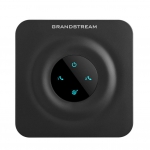
The Grandstream HT802 v2 is a compact and powerful Analog Telephone Adapter (ATA) that enables the seamless migration from traditional analog telephony to modern VoIP (Voice over IP) networks. With support for two FXS ports, it allows you to connect up to two analog telephones, fax machines or DECT base stations to an IP-based telephone system or VoIP provider. Thanks to its high voice quality, robust security features and wide interoperability, the HT802 v2 is ideal for small offices, home offices, branch locations and teleworkers who want to benefit from cost-efficient Internet telephony without replacing existing analog devices.
Technically, the Grandstream HT802 v2 offers two RJ11 FXS ports and one 10/100 Mbps Ethernet port for network integration. It supports common VoIP protocols such as SIP and is compatible with a wide range of IP PBXs and VoIP platforms. Advanced voice codecs help ensure excellent voice quality even across variable bandwidths, while echo cancellation and adaptive jitter buffering contribute to clear, stable calls. The device supports standard telephony features such as caller ID, call waiting, call transfer, 3-way conferencing and voicemail integration (depending on the telephone system or provider). Secure provisioning via HTTPS, TLS and certificate-based authentication helps protect configurations and communications against unauthorized access.
In terms of applications, the HT802 v2 is suitable wherever analog telephony equipment needs to be integrated into an IP environment. In small businesses, it allows the continued use of existing analog telephones alongside IP phones in a modern telephone system. At home or in the home office, it provides a simple way to connect existing cordless or corded phones to an Internet telephony service, allowing users to benefit from lower telephony costs and flexible tariffs. In branch offices or remote locations, it can be used to connect fax machines or door intercom systems to the central IP infrastructure.
The key advantages of the Grandstream HT802 v2 include simple installation, high reliability and flexibility. The compact design makes it easy to place the device in any environment, while an intuitive web interface and support for automatic provisioning significantly simplify configuration and mass deployment. Robust construction and stable firmware ensure reliable operation in everyday use, and broad interoperability with different VoIP providers and platforms protects your investment over the long term. For customers, this means: you can modernize your telephony infrastructure, reduce running costs and still continue to use proven analog devices.
Grandstream is a globally active manufacturer of IP communication solutions with a broad portfolio ranging from IP phones and ATAs to IP PBXs, gateways and video conferencing systems. The company focuses on interoperable, open-standards-based solutions that give customers freedom of choice and investment security. In its product development, Grandstream places value on energy-efficient designs and long product lifecycles, which can help reduce electronic waste and resource consumption compared to frequently replacing devices. By choosing a solution like the HT802 v2 that enables existing analog devices to be continued in use, you actively contribute to more sustainable resource utilization: instead of disposing of functioning telephones or fax machines, you integrate them into modern IP environments and thus extend their service life. This helps avoid unnecessary electronic waste and is a practical contribution to environmental protection, while at the same time lowering your telephony costs and improving your communication infrastructure.






 PC-Components
27.276
- CPU Processors 443- Computer Cases 3.909- External Optical Dr. 136- Fans&Cooling 2.939- Graphics Cards 512- Internal Optical Dr. 47- Motherboards 771- PC Adapters 2.445- PC Cables 8.924- Port Cards&Controll. 366- Power Supplies 4.262- RAM Memory Laptop 251- RAM Memory PC 1.910- Sound cards 19- more Components 342Scanner 523Servers&Accessories 6.703Tablets 1.789
PC-Components
27.276
- CPU Processors 443- Computer Cases 3.909- External Optical Dr. 136- Fans&Cooling 2.939- Graphics Cards 512- Internal Optical Dr. 47- Motherboards 771- PC Adapters 2.445- PC Cables 8.924- Port Cards&Controll. 366- Power Supplies 4.262- RAM Memory Laptop 251- RAM Memory PC 1.910- Sound cards 19- more Components 342Scanner 523Servers&Accessories 6.703Tablets 1.789