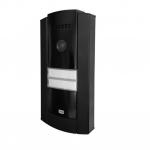
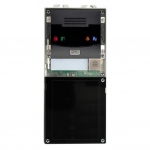
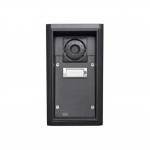
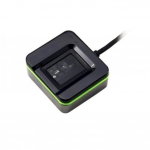
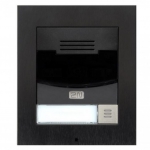
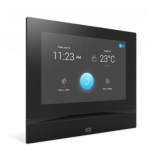
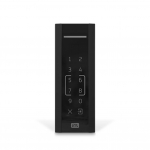
Access Unit M Touch Keypad & Rfid - 125khz, 13.56mhz, Nfc New 2n
671,39 EUR
plus shipping and customs
Accessories 2n
Shipping charges are minimized.
22 visitors are looking at this item
Delivery to US in:
5-9 workdays (only 4 left in stock)
Sales Rank:
#40 in Home&Garden Accessories #652 in Home&Garden
Style:
Home&Garden Accessories
Product No.:
2101024055
Description:
2N TELECOMUNIKACE 2N ACCESS UNIT M TOUCH KEYPAD+RFID 125KZ 13.56MHZ NFC (9161161)
The 2N 9161161 Basic Access Control Reader in black is a compact, modern RFID-based door access reader designed for professional building access control. It is intended as a front-end reader in a 2N access control system and is ideal for offices, residential buildings, commercial properties, and industrial sites. As a basic reader, it is typically combined with 2N controllers or intercom systems to provide a secure, centralized access solution.
Technically, the 9161161 reader is built for fixed installation at doors, gates or turnstiles. It supports common proximity card or token technologies (RFID) used in 2N access systems and is designed for integration into existing 2N infrastructures via the appropriate controllers (for example, door controllers or IP intercoms from 2N). The device is powered via low-voltage supply from the connected control unit and communicates using a standardized interface defined by the 2N system. The robust housing in black is designed for frequent daily use and for installation in indoor or protected outdoor areas, depending on the respective mounting and environment recommended by 2N. The compact dimensions make it easy to install next to doors, on frames or wall surfaces.
In practical use, the 2N 9161161 Basic Access Control Reader is used wherever secure and traceable access is required. In office buildings, it controls access to main entrances, office floors or server rooms. In residential projects, it is used for entrances, shared facilities or underground car parks. In commercial and industrial environments, it supports controlled access to production areas, warehouses or logistics zones. Thanks to its integration into the 2N ecosystem, access rights can be centrally managed, time-controlled access schedules can be defined, and events can be logged, depending on the connected controller and software.
The advantages for the user include higher security compared to mechanical keys, as access rights can be assigned, changed or revoked quickly without needing to replace locks. Lost cards or tokens can simply be blocked in the system. The reader also improves convenience: employees, residents, or service providers simply present their card or token at the reader for quick and contactless entry. The modularity of the 2N system allows the reader to be used in both small installations and larger, networked systems, making it a scalable solution for future expansions.
2N is an established manufacturer of IP intercoms, access control systems, and related communication solutions. The company is known for robust products designed for professional building technology, with a focus on interoperability and integration into IP networks and modern building management systems. 2N, as part of a globally active technology group, places value on long product life cycles, update-capable software, and high-quality manufacturing, which helps reduce failures and increases the long-term usability of the hardware.
Where 2N focuses on sustainability, this is typically reflected in energy-efficient electronics, durable materials, and long-term support for products and software. A long service life and the ability to update systems can help reduce electronic waste since systems do not need to be replaced as frequently but can be modernized via software and component upgrades. For the purchasing customer, this means that opting for a professional, long-lasting access system can be a contribution to more sustainable building technology: fewer replacements, less waste, and more efficient use of existing infrastructures. By choosing a 2N access solution, customers support manufacturers that are oriented toward long-term, quality-focused product strategies, which is beneficial both economically and ecologically.




!["Wolf [hardware/electronic] Gartenfräse 15 Cm Multi-star-WOLF-Garten DA-S weeder-Wolf-garten-Hardware/Electronic"](https://www.plattenladen.com/images/icecatdaten/878/103/4008423878103k.jpg "\"Wolf [hardware/electronic] Gartenfräse 15 Cm Multi-star-WOLF-Garten DA-S weeder-Wolf-garten-Hardware/Electronic\"")


![Gardena [hardware / electronic] Schlauchwagen Aquaroll M Easy - Gardena Schlauchwagen CleverRoll M Easy Metall Set](https://www.plattenladen.com/images/dgh_klein/524729_00k.jpg)