AMD Guard helps minimize potential attack surfaces when booting, running software, and accessing critical data AMD architecture With industry-leading architecture, performance, and security, our approach to processor design accelerates the pace of innovation. You can finally escape years of stagnation in the data center. Main Features Processor Processor Family AMD EPYC Processor Cores 24 Processor Socket SP3 Component for server/workstation Box No Cooler included No Processor Manufacturer AMD Processor base frequency 2.65 GHz Processor 7413 Processor Threads 48 Processor Cache 128 MB Processor Cache Type L3 Thermal Design Power (TDP) 180 W TDP-up configurable 200 W TDP down configurable 165 W processor boost frequency 3.6 GHz memory channels octa-channel memory types, processor supports DDR4 SDRAM memory clock rates, processor supports 3200 MHz memory bandwidth (max) 204.8 Gb/s graphics Built-in graphics adapters
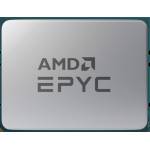
The AMD EPYC 7413 is a powerful server processor designed for demanding data center and enterprise workloads. With 24 physical cores and 48 threads at a base clock of 2.65 GHz, it delivers strong multi-threaded performance for virtualization, databases, container platforms and cloud-native applications. The large 128 MB cache helps reduce memory latency and accelerates access to frequently used data, making it particularly well-suited for data-intensive tasks, analytics and high-throughput services.
Using the proven SP3 socket platform, the EPYC 7413 integrates into a wide range of server systems from different vendors, enabling flexible configurations with multiple CPUs, large memory capacities and extensive I/O options. As an OEM version (part number 100-000000323), it is typically supplied for integration by system builders and data center operators, ideal for customized, rack-optimized solutions and scale-out environments.
The EPYC 7413 supports modern virtualization scenarios, allowing many virtual machines or containers to run in parallel on a single physical host. This consolidation of workloads helps reduce the number of physical servers required, which in turn can lower power consumption, cooling needs and the space required in the data center. For customers, this can lead to lower operating costs and a reduced environmental footprint. The combination of many cores, high memory bandwidth (platform-dependent) and a large cache also makes this CPU attractive for application servers, microservices, private cloud infrastructures and edge deployments.
AMD as a manufacturer has, in recent years, placed increasing emphasis on energy efficiency and performance per watt in its processor designs. While no specific sustainability metrics for this exact model are provided here, AMD publicly communicates goals around more efficient computing and supports architectures that enable customers to do more work with fewer resources. By choosing a modern, efficient server CPU like the EPYC 7413, buyers can contribute to better resource utilization in their IT infrastructure. Fewer servers for the same performance can mean less energy consumed and lower associated CO? emissions, so that the investment not only improves performance and scalability, but can also be a step toward more sustainable IT operations.


 PC-Components
28.287
- CPU Processors 474- Computer Cases 3.998- External Optical Dr. 139- Fans&Cooling 2.895- Graphics Cards 516- Internal Optical Dr. 66- Motherboards 795- PC Adapters 2.778- PC Cables 9.346- Port Cards&Controll. 365- Power Supplies 4.225- RAM Memory Laptop 300- RAM Memory PC 2.023- Sound cards 20- more Components 347Scanner 590Servers&Accessories 7.041Tablets 1.835
PC-Components
28.287
- CPU Processors 474- Computer Cases 3.998- External Optical Dr. 139- Fans&Cooling 2.895- Graphics Cards 516- Internal Optical Dr. 66- Motherboards 795- PC Adapters 2.778- PC Cables 9.346- Port Cards&Controll. 365- Power Supplies 4.225- RAM Memory Laptop 300- RAM Memory PC 2.023- Sound cards 20- more Components 347Scanner 590Servers&Accessories 7.041Tablets 1.835
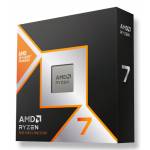


![Amd - AMD Ryzen 7 9800X3D processor 4.7 GHz 96 MB L3 Tray [Tray]](https://www.plattenladen.com/images/icecatdaten/592/660/08592978592660k.jpg)

![Amd - AMD Ryzen 7 9800X3D processor 4.7 GHz 96 MB L3 Tray [Tray]](https://www.plattenladen.com/images/icecatdaten/819/305/04251538819305Low2.jpg)
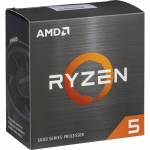
![Amd - AMD Ryzen 7 9850X3D processor 4.7 GHz 96 MB L3 Tray [Tray]](https://www.plattenladen.com/images/icecatdaten/820/615/04251538820615k.jpg)
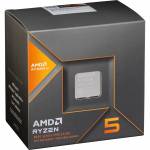







![Amd - AMD Ryzen Threadripper PRO 7965WX processor 4.2 GHz 128 MB L3 Tray [Tray]](https://www.plattenladen.com/images/icecatdaten/519/780/08592978519780k.jpg)
